Antimalarials: Their Differences and Effectiveness – A Complete Guide by BluepillExpress
 IndiaMart
 FIEO
FIEO
Malaria continues to be one of the most challenging infectious diseases worldwide, claiming hundreds of thousands of lives each year. Though preventable and curable, it requires the right use of medication — and that’s where antimalarials play a crucial role.
Antimalarial medicines are designed to prevent or treat malaria infections caused by Plasmodium parasites. Over the decades, a variety of antimalarial drugs have been developed, each with unique mechanisms, effectiveness, and side effects.
In this guide, BluepillExpress, a trusted global health supplier, explains the key differences between antimalarial drugs, how they work, and which options are most effective in preventing and treating malaria today.
Understanding Malaria and the Role of Antimalarials
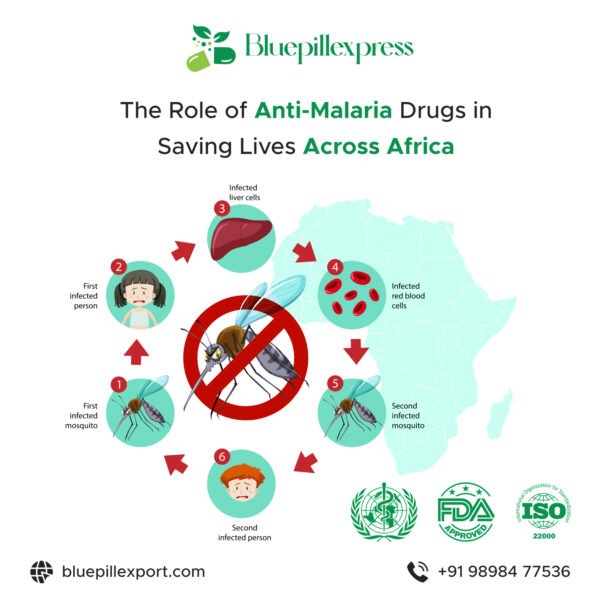
Malaria is caused by Plasmodium parasites transmitted through the bite of infected Anopheles mosquitoes. The disease progresses through liver and blood stages, making it complex to treat.
Antimalarial drugs work by interrupting the parasite’s life cycle, preventing it from multiplying inside human red blood cells or the liver. The right medication depends on the Plasmodium species involved, the severity of the infection, and regional drug resistance patterns.
Antimalarials are used for two main purposes:
- Prevention (Prophylaxis): Protects travelers or residents in malaria-endemic regions.
- Treatment: Cures active malaria infection and prevents relapse.
Major Types of Antimalarial Drugs
Antimalarials are broadly classified based on how and where they act on the parasite. The most commonly used include:
- Chloroquine
- Quinine
- Mefloquine
- Doxycycline
- Atovaquone-Proguanil (Malarone)
- Artemisinin-Based Combination Therapies (ACTs)
- Primaquine and Tafenoquine
Let’s explore each of these in detail.
Chloroquine
Overview
Chloroquine was once the gold standard for malaria prevention and treatment. It is especially effective against Plasmodium vivax, P. ovale, and P. malariae.
Mechanism
Chloroquine interferes with the parasite’s ability to digest hemoglobin in red blood cells, leading to toxic buildup that kills the parasite.
Effectiveness
- Highly effective where there’s no chloroquine resistance.
- Resistance by P. falciparum in many parts of Africa and Asia has reduced its use.
Advantages
- Inexpensive and widely available.
- Safe for pregnant women and children.
Limitations
- Widespread resistance limits its use.
- Possible side effects: nausea, blurred vision, and itching.
BluepillExpress ensures availability of chloroquine in regions where it still works effectively, especially for non-resistant malaria strains.
Quinine
Overview
Quinine is one of the oldest antimalarial drugs, derived from the bark of the cinchona tree. It’s mainly used for severe malaria or when newer drugs are unavailable.
Mechanism
Quinine interferes with the parasite’s ability to digest hemoglobin and causes toxic buildup, similar to chloroquine.
Effectiveness
- Still effective for severe or complicated malaria cases.
- Often combined with antibiotics like doxycycline or clindamycin for enhanced results.
Advantages
- Rapidly reduces parasite load.
- Useful in cases of drug-resistant malaria.
Limitations
- Causes side effects such as ringing in the ears, dizziness, and nausea.
- Requires multiple doses per day for several days.
- Not ideal for long-term prevention.
Mefloquine
Overview
Mefloquine, developed as an alternative to chloroquine, is effective against most strains of P. falciparum. It’s widely used for malaria prevention among travelers.
Mechanism
Mefloquine disrupts the parasite’s growth inside red blood cells.
Effectiveness
- Effective against chloroquine-resistant malaria.
- Taken once weekly, making it convenient for travelers.
Advantages
- Long-lasting protection.
- Suitable for pregnant women after the first trimester.
Limitations
- May cause side effects like vivid dreams, anxiety, or mood changes.
- Should be avoided by individuals with psychiatric or seizure disorders.
Doxycycline
Overview
Doxycycline is an antibiotic that also prevents malaria infection. It’s particularly effective in areas with drug-resistant P. falciparum.
Mechanism
It prevents the parasite from producing essential proteins, stopping its growth inside the body.
Effectiveness
- Excellent for malaria prevention in resistant regions.
- Often combined with quinine or artesunate for treatment.
Advantages
- Inexpensive and easy to obtain.
- Also protects against other infections like typhoid and leptospirosis.
Limitations
- Must be taken daily.
- Can cause stomach upset, sun sensitivity, or yeast infections.
- Not recommended for pregnant women or children under 8 years old.
BluepillExpress often supplies doxycycline-based antimalarials for travelers and military personnel in high-risk zones, due to its affordability and proven protection.
Atovaquone-Proguanil (Malarone)
Overview
Malarone is a modern, well-tolerated combination of two drugs: atovaquone and proguanil. It’s used for both prevention and treatment.
Mechanism
Atovaquone blocks parasite energy production, while proguanil interferes with parasite DNA replication. Together, they deliver a powerful double action.
Effectiveness
- Highly effective against multi-drug-resistant malaria.
- Fast-acting and well tolerated.
Advantages
- Few side effects.
- Short treatment course (3 days for treatment; daily for prevention).
- Suitable for last-minute travelers.
Limitations
- More expensive than other drugs.
- Must be taken daily.
- Not recommended for people with severe kidney disease.
Artemisinin-Based Combination Therapies (ACTs)
Overview
ACTs are currently the most effective treatment for Plasmodium falciparum malaria worldwide. They combine fast-acting artemisinin with a longer-lasting partner drug.
Common ACTs:
- Artemether-lumefantrine (Coartem)
- Artesunate-amodiaquine
- Dihydroartemisinin-piperaquine
Mechanism
Artemisinin rapidly kills malaria parasites in the blood, while the partner drug clears remaining parasites and prevents recurrence.
Effectiveness
- High cure rate (over 95%) when taken correctly.
- Effective against most resistant strains.
Advantages
- Rapid fever reduction and symptom relief.
- Short course (usually 3 days).
- Recommended by WHO as first-line treatment for P. falciparum malaria.
Limitations
- Costlier than older drugs.
- Must be taken exactly as prescribed to avoid resistance.
BluepillExpress plays a crucial role in distributing WHO-approved ACTs across Africa and Asia, supporting hospitals and clinics in their malaria control efforts.
Primaquine and Tafenoquine
Overview
These drugs are used to prevent relapse of malaria caused by P. vivax and P. ovale. They kill dormant liver-stage parasites (hypnozoites) that cause the infection to return weeks or months after recovery.
Mechanism
Primaquine and tafenoquine act on dormant liver forms, eliminating the parasite completely.
Effectiveness
- The only drugs that prevent relapse of P. vivax and P. ovale.
- Often given after completing blood-stage treatment.
Advantages
- Prevents recurrence and transmission.
- Short-course versions (like tafenoquine) improve adherence.
Limitations
- Can cause hemolytic anemia in people with G6PD deficiency (a genetic condition).
- Requires screening before use.
- Not safe during pregnancy.
Comparing the Effectiveness of Antimalarials
| Drug/Combination | Prevention | Treatment | Resistance Level | Notes |
|---|---|---|---|---|
| Chloroquine | Moderate | Moderate | High in many areas | Use only in non-resistant zones |
| Quinine | Low | High | Low | For severe cases or resistance |
| Mefloquine | High | Moderate | Low-Moderate | Weekly dosing |
| Doxycycline | High | Moderate | Low | Daily dose |
| Atovaquone-Proguanil (Malarone) | Very High | High | Low | Fewest side effects |
| ACTs | – | Very High | Very Low | WHO first-line treatment |
| Primaquine/Tafenoquine | – | High (relapse prevention) | Low | For P. vivax / P. ovale |
This table helps doctors and travelers choose the most suitable drug depending on their location, medical history, and risk exposure.
How to Choose the Right Antimalarial
Selecting the correct antimalarial depends on several factors:
- Destination: Resistance patterns vary by region. For instance, chloroquine is ineffective in much of Africa.
- Duration of Stay: For long trips, drugs with fewer side effects are preferable.
- Health Status: Pregnant women, children, and people with chronic illnesses need specific medications.
- Cost and Availability: Some modern drugs like Malarone can be expensive.
- Personal Tolerance: Some individuals react differently to medications.
BluepillExpress advises consulting a healthcare provider before starting any malaria prophylaxis or treatment to ensure safety and effectiveness.
Managing Side Effects of Antimalarials
Though generally safe, antimalarial drugs can cause side effects such as:
- Nausea or vomiting
- Dizziness or fatigue
- Itching or rash
- Sleep disturbances
Tips to minimize discomfort:
- Take medication with food.
- Stay hydrated.
- Avoid alcohol while on medication.
- Report severe or persistent symptoms to a doctor immediately.
Antimalarial Resistance: A Growing Threat
Drug resistance is one of the biggest challenges in malaria control. Resistance occurs when parasites mutate and survive despite drug treatment.
Factors contributing to resistance:
- Incomplete or incorrect dosing.
- Use of counterfeit or substandard drugs.
- Overuse of single-drug therapies.
To combat resistance, BluepillExpress emphasizes the use of quality-assured combination therapies (like ACTs) and public awareness on correct dosage adherence.
The Future of Antimalarial Treatment
Research is ongoing to develop next-generation antimalarials that can:
- Overcome drug resistance.
- Provide single-dose cures.
- Offer longer-lasting protection.
Promising new drugs include:
- Artemisone and Artefenomel: Modified artemisinin derivatives.
- KAF156: A novel compound effective against multiple parasite stages.
- Vaccine breakthroughs: The RTS,S vaccine provides partial protection for children in Africa.
As innovation continues, BluepillExpress remains committed to distributing these cutting-edge solutions to regions most in need.
Combining Prevention with Medication
No drug can provide 100% protection alone. Combine medication with preventive strategies for best results:
- Use insecticide-treated bed nets (ITNs).
- Apply DEET-based repellents.
- Avoid mosquito-prone areas after dark.
- Wear long-sleeved clothing.
- Eliminate standing water near your home.
A holistic approach ensures maximum defense against malaria infection.
Conclusion: Informed Choices Save Lives
Antimalarial drugs have evolved from quinine bark to advanced combination therapies — a journey of science and persistence that continues to save millions of lives every year. Each medication has its unique strengths, ideal uses, and limitations.
Choosing the right one depends on understanding local resistance, medical conditions, and treatment goals. Whether you’re traveling, living in an endemic region, or supporting malaria elimination programs, staying informed is your strongest protection.
BluepillExpress proudly supports global malaria prevention and treatment by supplying authentic, effective, and affordable antimalarial medicines to healthcare systems, pharmacies, and NGOs worldwide. Together, with awareness and action, a malaria-free future is within reach.